For over four decades, Sheffield-based STAUFF UK has powered the machinery that keeps Britain moving. Yet as Made in Yorkshire members discovered during a recent factory tour, standing still is never an option for the £34 million fluid power specialist.
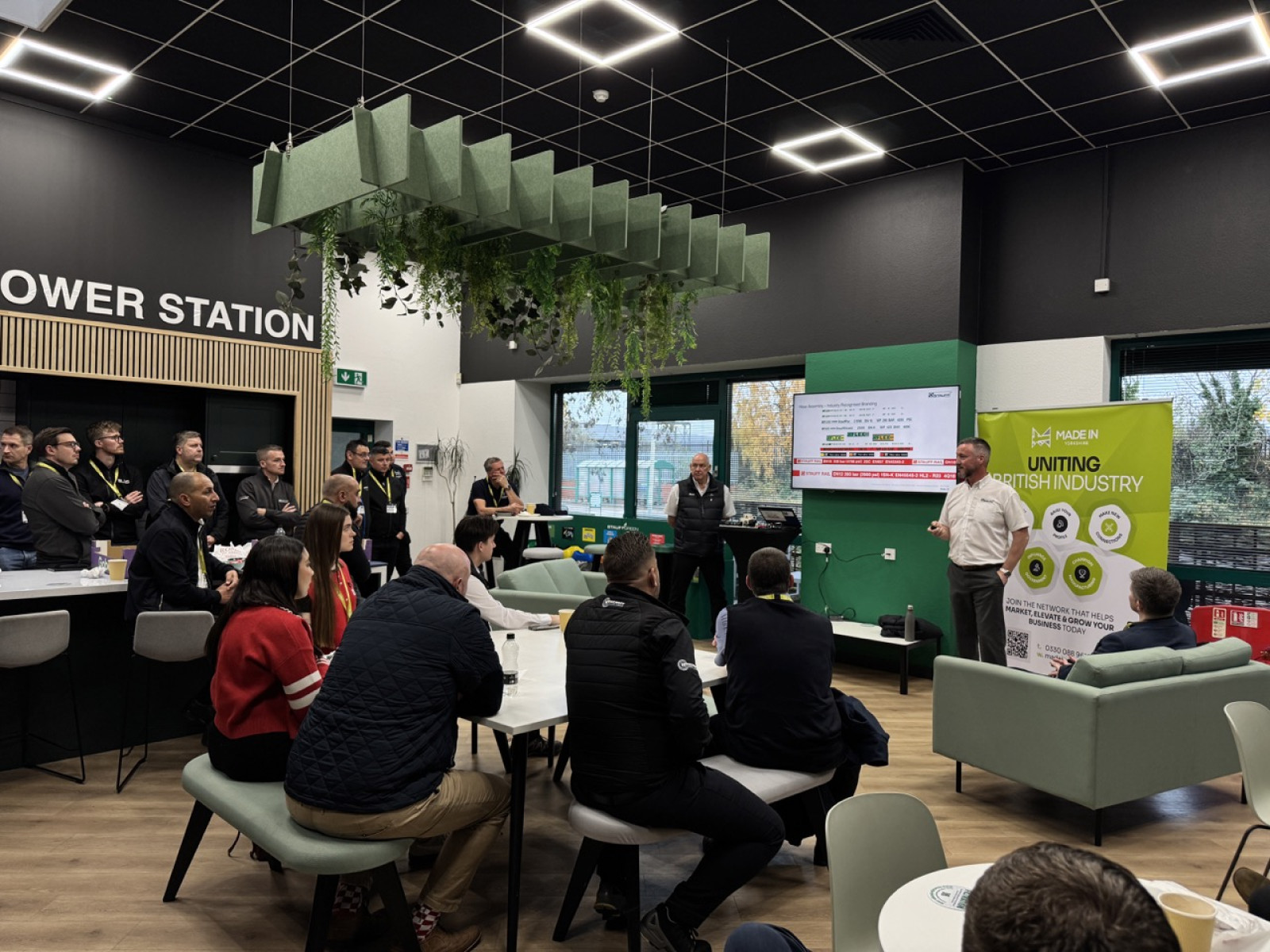
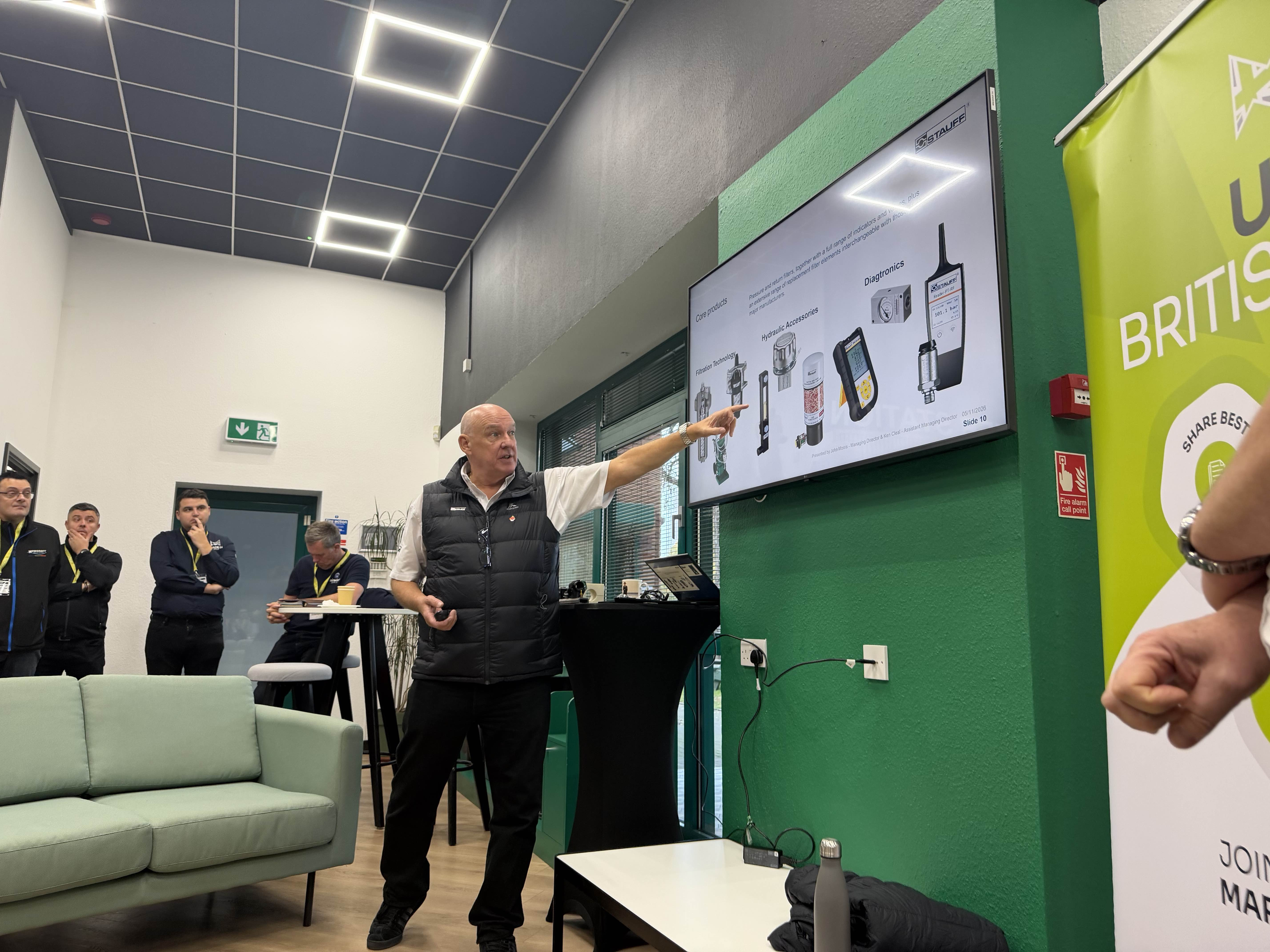
Welcoming delegates to the 135,000 sq ft Carlisle Street East site, Managing Director John Morris—marking 45 years’ service—and Assistant Managing Director Ken Cleal delivered a candid masterclass in value-added engineering, lean management and IT upgrades.
Part of a third-generation German family group turning over €600 million across 24 countries, STAUFF UK employs 147 staff across wholly owned sites in Sheffield, Aberdeen and Lisburn.
“Imagine your boiler at home and your radiator; we do all the interconnecting bits in between that no computer will ever replace,” explains John. “From road sweepers, JCBs and airport equipment to defence and trains, hydraulics are everywhere. In 2024 alone, we achieved £8 million in sales across four rail contracts.”
From a Green Pipe Clamp to 7,000 Bar Precision
STAUFF began in Germany with a plastic pipe clamp designed by founder Arnold Menssen to replace wooden blocks on heavy presses—establishing the DIN 3015 standard. While over 80% of STAUFF UK’s core components are made in Germany, the Sheffield team recognised early on that growth meant doing more than shifting boxes.
“When I joined 16 years ago, we looked at what else we could bring as a value-add,” says Ken. “If we were selling tube and clamps, why not start manipulating and bending that tube?”
Today, Sheffield houses a 30,000 sq ft tube-processing facility. Equipped with 10 CNC bending machines—including six from Yorkshire manufacturer Unison Ltd—the team forms, bends, welds and brazes everything from 3mm tubing to true four-inch (101.6mm) pipework.
That four-inch machine, boasting 35,000 Nm of torque, proved decisive when STAUFF UK supplied the aft aircraft lift hydraulics for HMS Queen Elizabeth and HMS Prince of Wales.
“That tubing was 60mm diameter by 6mm wall 316 seamless stainless steel, and on our large machine it was like putting a knife through butter,” Ken recalls. “Every tube was a one-off, so we had to get it right first time.”
Alongside tube manipulation sits STAUFF’s flexible hose assembly and testing division. With hoses operating up to 4,250 bar and test rigs reaching 7,000 bar—3,500 times a car tyre’s pressure—100% traceability is critical. Every product is pin-stamped or laser marked to log the operator, machine and material batch, while rail assemblies meet EN 45545 smoke and toxicity standards.
‘STAUFF Line’: Straight to the Line-Side
To move beyond component quotes, STAUFF UK combined its German components, manipulated tubes and hoses under one turnkey concept: STAUFF Line. Born in Sheffield and now rolled out globally, the service delivers kitting, sub-assemblies and line-side sequencing. In one rail project, a train builder went from ordering 330 part numbers per vehicle to ordering five zone kits.
“We look at the customer’s whole process so we eliminate ourselves from being one of 20 companies quoting on price,” says John. “We’re not the cheapest; we aim to be the best value. We asked: what if we eliminated your stores, saved money on stock and went straight to line-side? We designed a delivery frame that pulls up alongside the train, uncouples for each side of the carriage, and presents every part on a shadow board with poka-yoke error-proofing.”
The SAP S/4HANA Wake-Up Call
The most talked-about segment came when John and Ken shared an unfiltered account of migrating from SAP R/3 to SAP S/4HANA last July.
Selected as the group’s pilot site—operating an automated storage system with three robots and 29,000 locations—STAUFF UK spent two years planning with consultants and built six to eight weeks of buffer stock. Still, the software interface with the automated warehouse failed at go-live.
“It has been the biggest challenge in my management career—it makes COVID look like a walk in the park,” John told delegates. “I had grown men crying in my office, working 22 hours a day just to get goods out of the door. We built our business on next-day delivery, and suddenly we let customers down.”
For Ken, the root cause was a lack of physical testing: “Clever programmers sat around a table bouncing between screen processes saying, ‘Works perfectly.’ What about taking a physical product, scanning it inbound, putting it in a location, moving it to the next process, outbounding it and raising an invoice and dispatch note? It worked around the table, then we flicked the switch and couldn’t do anything.”
When another upgrade arrived this autumn, STAUFF insisted on live physical testing—catching bugs before customers were impacted.
Sharing Best Practice
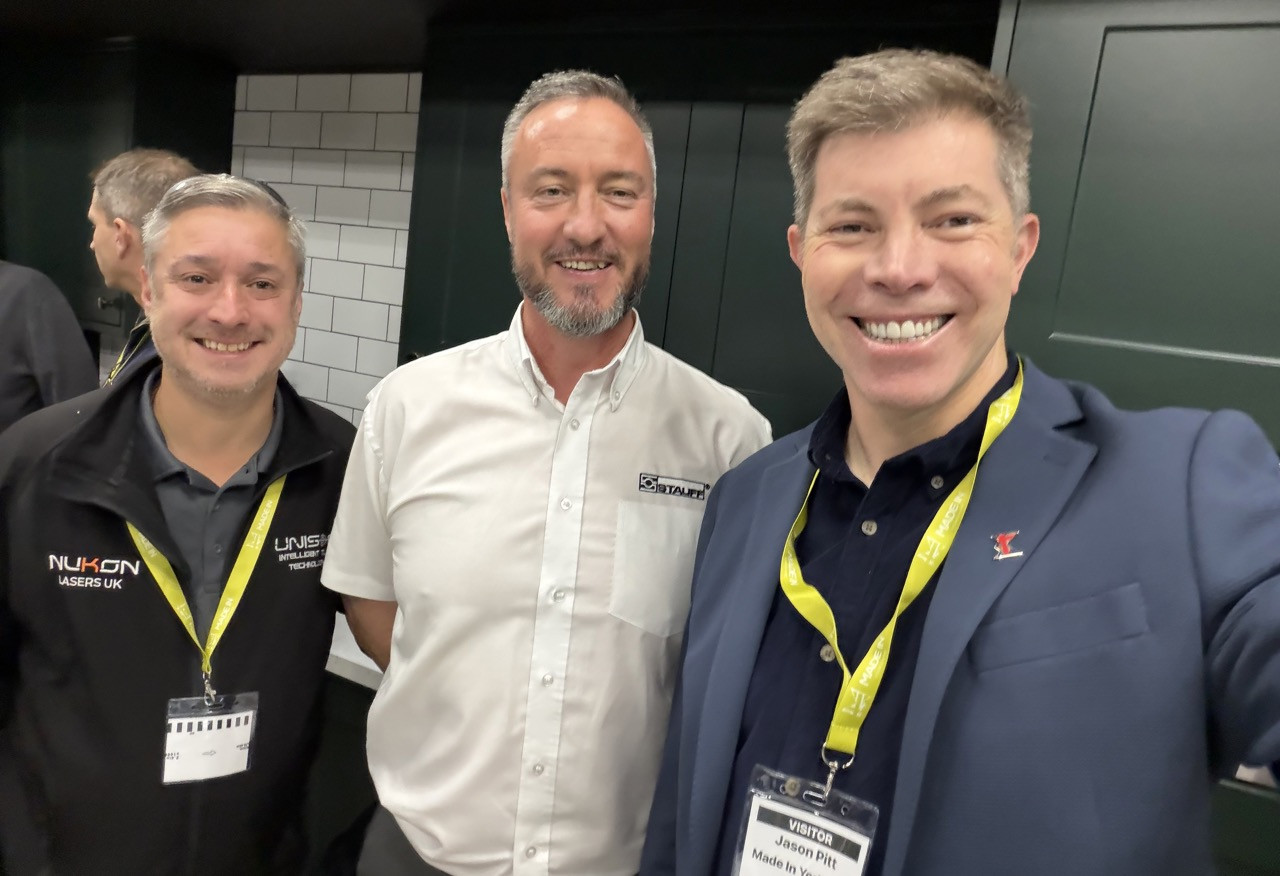
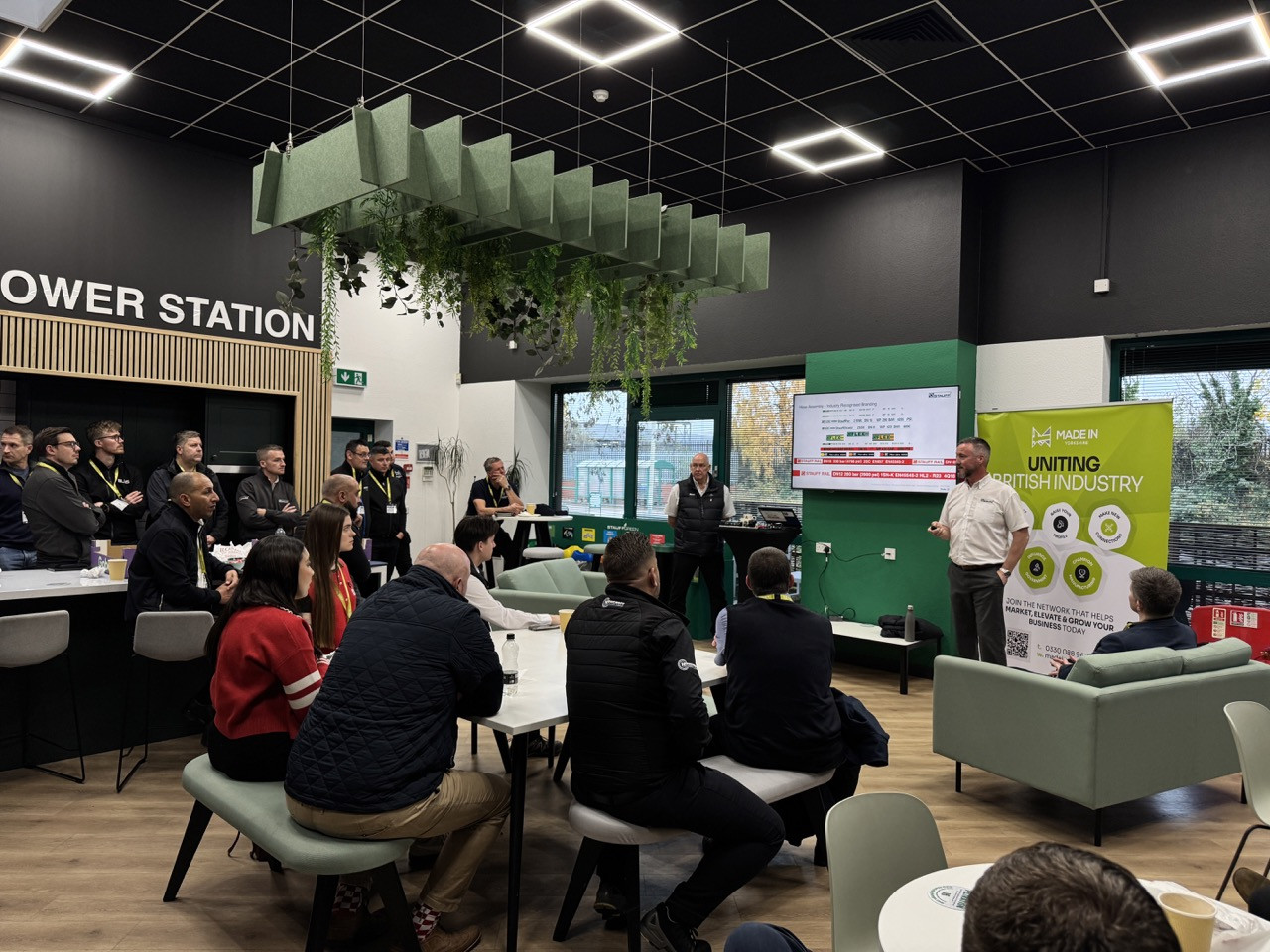
Jason Pitt, CEO of Made in Group, praised the team’s openness: “Having organised a factory tour five years ago at STAUFF, it’s remarkable to see how the business has maintained standards over time, from investments in staff facilities and an immaculate shop floor to learning about the challenges and how to overcome issues presented from implementing new IT systems.”
Tony Baldassarra, Site Lead and Director at Greene Tweed, noted: “STAUFF is very organised. It's very similar to what we do at Greene Tweed, and the processes are robust, with capable and trained staff and a very clean environment.”
Chris Houston, Managing Director of Tadweld, added: “Another great day for Made in Yorkshire. It was really insightful walking around such a future-orientated factory. There is some really good automation and also some really brilliant basics in terms of visual management, shadow boards, red, amber, green statuses and things like that. As usual, a really nice way to spend the morning sharing best practice with some of the manufacturers in Yorkshire.”
Craig Russell, of Clement International Freight, concluded: “It's good to see the automation side for the whole pick-and-pack system and then the benefits of the ERP once it became viable and usable. It was also interesting hearing what they were saying about being a global, German-owned company and how they approached customs issues post-Brexit.”