
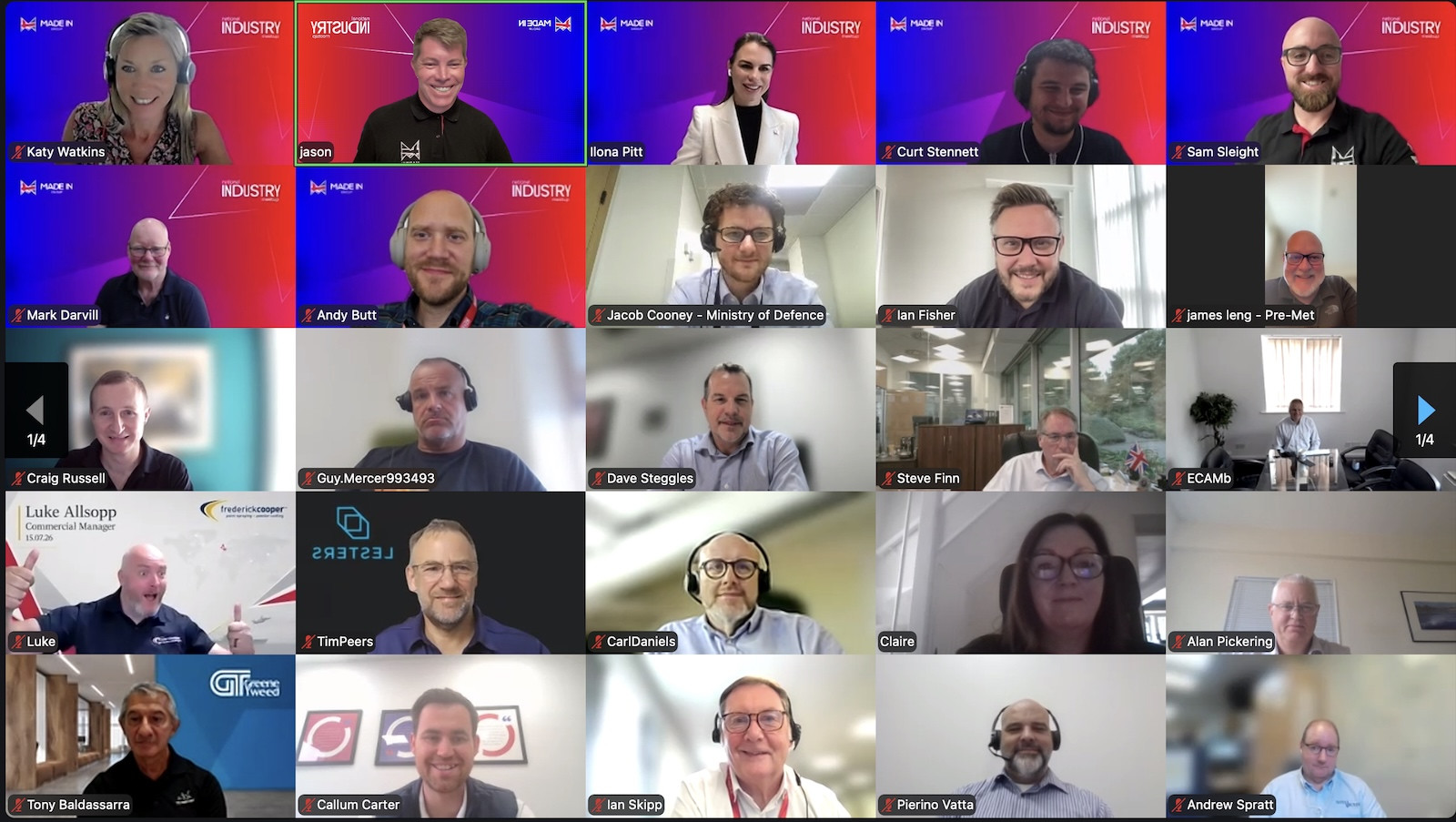
Made in Group’s latest National Industry Meet-up brought together manufacturers, defence specialists and government representatives to explore how SMEs can enter defence supply chains, pursue export opportunities and align their capabilities with future UK requirements.
The UK’s defence sector is entering a period of significant investment and change. For manufacturers, engineering businesses and technology led SMEs, this could create substantial new opportunities.
But how does a business actually break into defence?
That was the central question at Made in Group’s latest National Industry Meet-up, which brought together manufacturers, defence stakeholders and industry experts for a special online event focused on accessing the sector.
Hosted by Made in Group director Ilona Pitt, the 75-minute session explored defence exports, supply-chain accessibility and the role that innovation will play in developing future UK capability.
Made in Group’s National Industry Meet-ups are designed to share best practice, introduce members to new ideas and create connections across the manufacturing community. The online format enables people from different regions, sectors and levels of experience to take part without the travel, cost and capacity restrictions of a physical event.
This was particularly valuable for a subject as large and complicated as defence.
Opening the event, Ilona explained that Made in Group exists to connect manufacturers, open doors and give industry a stronger collective voice.
Supporting SMEs into international markets
The first speaker was Jacob Cooney, SME Engagement Project Manager within the Ministry of Defence’s National Armaments International division.
Jacob outlined the support available to UK SMEs interested in defence exports and international supply chains.
This includes regional desk officers with expertise in particular overseas markets, teams based within the UK’s diplomatic network, military capability advisers, international events and dedicated export support.
The transfer of the defence export function from the Department for Business and Trade into the Ministry of Defence is also intended to provide businesses with a more joined-up service.
Export activity now sits closer to the MOD’s procurement, commercial and innovation teams, potentially giving SMEs a clearer route through what has traditionally been a fragmented system.
However, companies must still prepare properly. Export controls, product standards, market research, regional partnerships and procurement portals all need to be considered before a business can confidently pursue international opportunities.
Finding the right place in the supply chain
Andrew Butt, Chair of the Yorkshire and Humberside Regional Defence and Security Cluster, focused on one of the greatest barriers facing SMEs: understanding where they fit.
Defence is a vast ecosystem involving the MOD, prime contractors and several layers of specialist suppliers. Approaching the MOD or a major prime directly may therefore not always be the most effective starting point.
Businesses need to identify which programme, platform, system or level of the supply chain genuinely requires their capability.
They must also understand the cost of becoming defence ready.
Certification, cyber security, insurance, quality standards and other compliance requirements will not disappear simply because the Government wants more SMEs to participate.
Defence may be growing, but that does not automatically make it the right market for every manufacturer.
Andrew encouraged businesses to study the Strategic Defence Review, Defence Industrial Strategy and Defence Investment Plan before committing significant resources. They should then consider what makes their capability rare, valuable or different from what is already available.
Regional Defence and Security Clusters can support this process by connecting manufacturers with defence organisations, universities, investors, local authorities and other businesses.
Connecting industry with frontline need
The final speaker, Mark Darvill, Transformation and Development Lead at UK Defence Innovation, explained how the MOD is attempting to connect operational challenges with industry capability.
UK Defence Innovation gathers requirements from frontline commands and turns them into clearer problem statements to which businesses can respond.
Its priority themes include autonomy, decision advantage, logistics and support, delivering effects at range and pace, and protection.
These areas extend well beyond traditional defence suppliers.
Companies working in robotics, sensors, artificial intelligence, medical devices, advanced materials, energy or manufacturing technology may already possess expertise that could be adapted to meet defence requirements.
As Mark explained, dual use technology should be treated as a strategy rather than an afterthought.
Following the presentations, members joined virtual roundtable discussions with each speaker, allowing them to examine the subjects in greater detail and ask questions relevant to their own businesses.
The opportunities within defence are real, but they will not be unlocked by investment announcements alone.
Manufacturers must do their research, understand the risks and find the right points of entry. Government, primes and support organisations must also make the sector easier to navigate.
Ultimately, UK defence capability will depend on the strength of the industrial community behind it.
By connecting the right people, sharing knowledge and turning manufacturing expertise into practical solutions, British industry can help strengthen both national security and economic resilience.
Made in Group members can RSVP for upcoming National Industry Meet-ups, factory tours and other best practice events directly through their member dashboard.
The Made in Group best-practice programme is designed to drive productivity, innovation and continuous improvement throughout the manufacturing supply chain. By bringing manufacturers together to share ideas, open doors and learn from one another, the programme helps members turn collective experience into practical progress.